Historic Home vs. New Construction: Which Fits You?
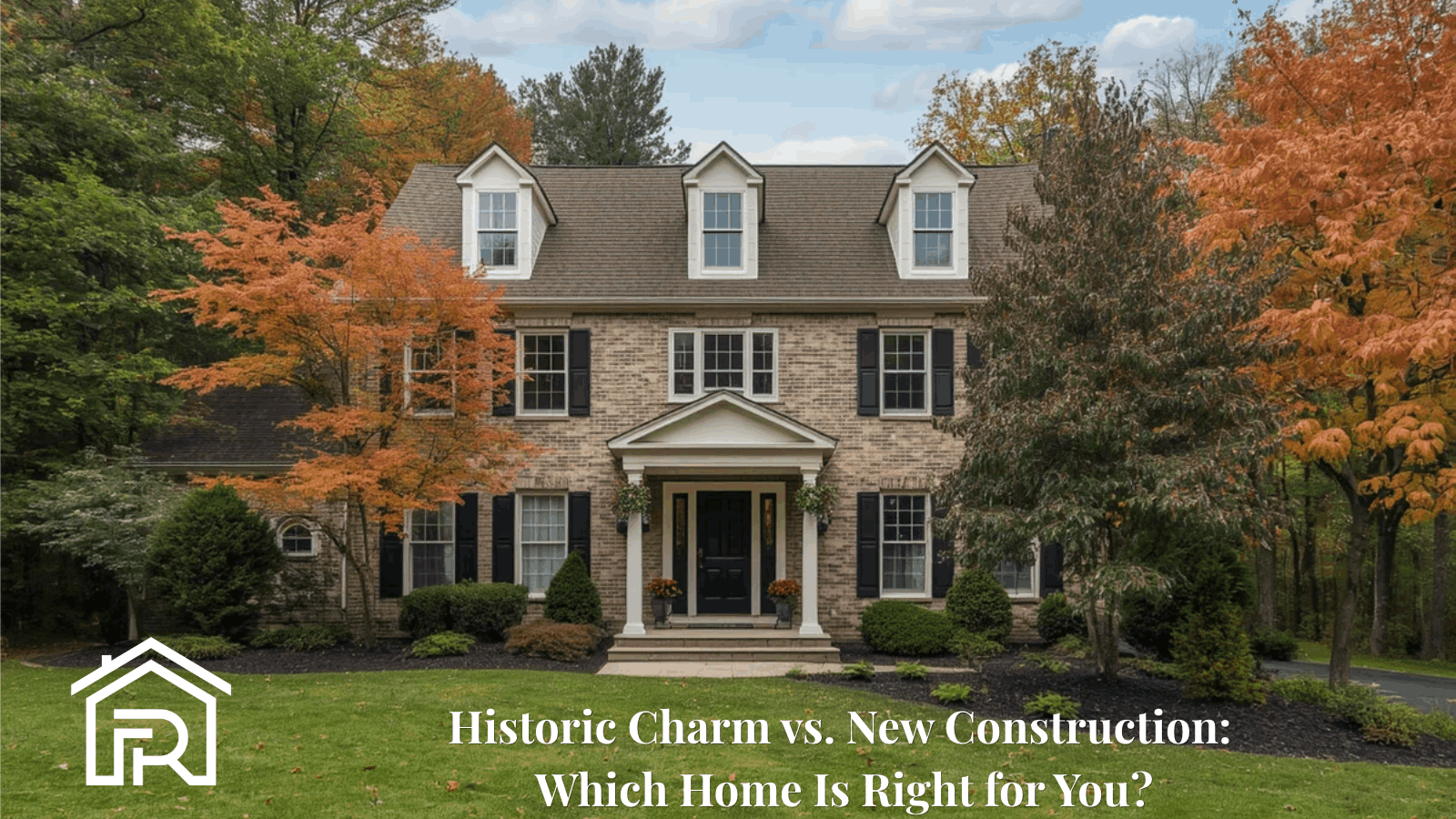 Historic Charm vs. New Construction: Which Home Is Right for You?
Few decisions shape daily life in a home as much as this one. A 1920s Tudor with original woodwork and a brand-new home with an open floor plan can both be wonderful, but they ask different things of you. Around Chester County and northern Delaware, you can find both within a short drive, so here's how to think it through.
The Case for Historic and Older Homes
Character you can't replicate. Original details like plaster walls, hardwood floors, built-ins, and architectural touches give older homes a personality that new construction often can't match.
Established neighborhoods. Older homes tend to sit in places with mature trees, walkable streets, and a settled feel. In towns like Kennett Square, West Chester, and New Castle, historic homes are often steps from downtown shops and restaurants.
Often more space on the lot. Older neighborhoods can offer bigger yards than some newer, tightly planned developments, though this varies a lot by location.
The Trade-Offs of Older Homes
- More maintenance, sooner. Roofs, windows, plumbing, and electrical systems may be original or aging. Budget for repairs and updates.
- Energy efficiency. Older homes often have less insulation and older windows, which can mean higher heating and cooling costs.
- Layouts that reflect their era. Smaller rooms, fewer closets, and compartmentalized floor plans are common, and opening them up can be expensive.
- Possible age-related issues. Homes built before 1978 may contain lead-based paint, and older homes can have other concerns an inspector should evaluate carefully.
- Historic district rules. In designated historic districts, exterior changes may require design review. Ask before you buy if you're planning projects.
The Case for New Construction
Modern layouts. Open floor plans, larger kitchens, walk-in closets, and primary suites are standard in many newer homes.
Lower initial maintenance. With new roofs, systems, and appliances, the first years often bring fewer surprise repairs, and many builders include a warranty on their work.
Energy efficiency. Newer homes are built to current energy codes, which can mean lower utility bills.
Customization. Depending on the builder and timing, you may be able to choose finishes, layouts, and features, sometimes before construction is complete.
Builder incentives. Some builders offer incentives such as help with closing costs or rate buydowns. These vary, so ask what's currently available.
The Trade-Offs of New Construction
- Less established surroundings. Landscaping may be young, and neighborhoods may still be filling in around you.
- HOA fees and rules. Many newer communities have homeowners associations with fees and guidelines on exterior changes.
- Timelines can slip. If you're building rather than buying a completed home, delays are possible, so don't plan a move-out date too tightly.
- Extras add up. Upgrades and lot premiums can push the final price well above the base price.
- You still need an inspection. New doesn't automatically mean flawless. An independent inspection is worthwhile, even on a brand-new home.
Questions to Help You Decide
- How do you feel about projects? If you enjoy restoration work, an older home can be rewarding. If you'd rather unpack and relax, new construction may fit better.
- What matters more: location or layout? Historic homes are often in walkable, central locations; new construction is often on the edges of town.
- What's your budget for the unexpected? Older homes benefit from a healthy repair reserve.
- How long will you stay? Longer stays can make early maintenance investments in an older home easier to justify, or make a new home's lower upkeep more valuable.
- Do you want to be part of an HOA? Some people love the amenities and upkeep; others prefer fewer rules.
The Bottom Line
There's no right answer, only a right fit. If you love character and walkability and don't mind some upkeep, an older home can be a joy. If you want modern living with fewer immediate projects, new construction may be the better match. Whichever you choose, a thorough inspection and a clear-eyed look at costs will serve you well.
Not sure which direction fits you best? Contact Foraker Realty — we work with both historic and new homes across Chester County and Delaware.
Categories
Recent Posts